
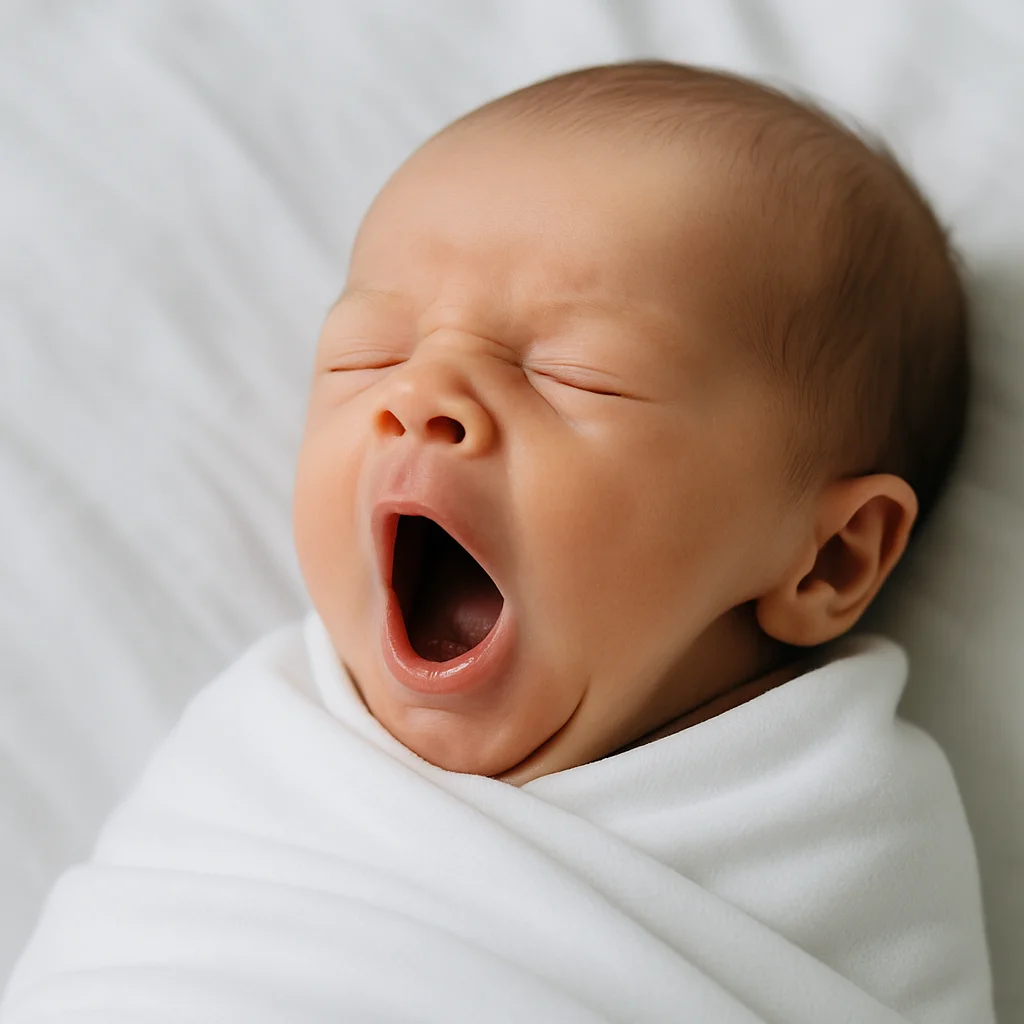
Is Your Baby Trying to Tell You Something? Let’s Talk About Newborn Yawning.
It’s 2 AM, and your little one is stirring. You’ve just fed them, changed their diaper, and rocked them gently, yet they seem… restless. What gives? You might be overlooking one of the most subtle, yet incredibly important, signals your newborn is sending: a yawn. Forget the frantic crying for a moment; that often comes later. I’ve seen countless parents in {{businessLocation}} struggle with deciphering their baby’s needs, and time and again, it comes down to recognizing these early, quiet cues. Newborn yawning isn’t just a sign of tiredness; it’s a sophisticated communication tool. Understanding this simple reflex can be a game-changer for establishing healthy sleep patterns and reducing parental stress. Think of it as your baby’s first whispered request for downtime. In my experience, parents who tune into these early yawns often find themselves navigating the often-turbulent newborn phase with a bit more grace and a lot less guesswork. So, let’s dive deep into this fascinating, and often underestimated, aspect of infant behavior. We’ll explore what a yawn truly signifies beyond simple fatigue and how you can use this knowledge to your advantage.
Beyond Just Tired: The Science Behind the Newborn Yawn
So, why do babies yawn, especially when they seem perfectly content just moments before? It’s a question that has puzzled many parents, and the scientific community has offered several compelling theories. One prominent idea suggests that yawning is a way for the body to increase alertness when it’s starting to dip. It sounds counterintuitive, right? You’d think a yawn would only happen when you’re already nodding off. However, some research indicates that the deep inhale and stretch associated with yawning can actually boost oxygen levels to the brain and stimulate the nervous system, acting as a brief, natural jolt to keep things functioning. This is particularly relevant for newborns who are still developing their internal regulatory systems.
Another theory, and one I find particularly relevant to observing our little ones, is that yawning is a primitive reflex, possibly linked to regulating brain temperature. Studies have shown a correlation between brain temperature and yawning frequency in both infants and adults. When the brain starts to get a little too warm, a yawn might be triggered as a cooling mechanism. Think about it: a warm, cozy baby, perhaps after a feeding or being held close, might start to yawn as their internal temperature subtly rises. This doesn’t mean they’re overheating dangerously, but rather that their sophisticated internal thermostat is signaling a need for a change of pace, often leading to sleep. It’s a fascinating biological process that’s far more complex than we often give it credit for. Recognizing this biological imperative is key to understanding its role as a sleep cue. We’ve observed this phenomenon repeatedly at {{businessName}}, where understanding these subtle cues helps our clients better support their newborns’ needs.
Recognizing the yawn: More Than Just an Open Mouth
Observing a newborn yawn requires a keen eye, as it’s often not the dramatic, jaw-stretching yawn you might expect from an adult. For babies, it can be much subtler. You might notice a brief, gentle opening of the mouth, sometimes accompanied by a slight scrunching of the nose or eyebrows. It’s often a fleeting expression, easily missed if you’re not actively looking for it. Some babies might also stretch their arms or legs simultaneously, a sort of full-body signal that they’re winding down. The key is to look for these signs before your baby becomes overtly fussy or starts to cry. Crying is a late-stage sleep cue, meaning your baby is likely already overtired by the time they reach that point. Early cues like yawning, eye-rubbing, or pulling at their ears are your golden ticket to catching them in the ‘drowsy but awake’ window, which is ideal for encouraging independent sleep.
I’ve coached many parents through this, and the shift in their understanding is palpable when they start noticing these pre-cry signals. Instead of reacting to a meltdown, they learn to proactively respond to a yawn. This proactive approach not only benefits the baby by preventing overtiredness but also significantly reduces stress for the parents. Think of it as becoming a baby whisperer, decoding their non-verbal language. This skill takes practice, but it’s incredibly rewarding. Pay attention to the context, too. Is the yawn happening after a feeding? During quiet cuddle time? As you’re preparing for a nap? These contextual clues help confirm that the yawn is indeed a signal for sleep. It’s about building a comprehensive picture of your baby’s state, not just focusing on a single action. This nuanced observation is something we emphasize at our {{businessType}} services in {{businessLocation}}, helping families build stronger connections through better communication.
The Yawn-to-Sleep Connection: Timing is Everything
This is where the magic truly happens. A yawn, especially when observed in conjunction with other potential sleep indicators, is a powerful signal that your baby is ready for sleep. But here’s the crucial part: you need to act on it promptly. If you miss the yawn and wait for the overtired signs (like frantic crying, arching the back, or becoming inconsolable), you’ve likely missed the optimal window. When babies become overtired, their bodies release cortisol, the stress hormone, which actually makes it harder for them to fall asleep and stay asleep. It’s a frustrating cycle that many parents experience.
My advice, honed over years of working with new families, is to view that yawn as your cue to start the wind-down process. This doesn’t necessarily mean immediately putting them in the crib. It means initiating your calming bedtime or naptime routine. This could involve dimming the lights, putting on some white noise, singing a soft lullaby, or a gentle swaddle. The goal is to create a predictable, soothing transition from wakefulness to sleep. By consistently responding to early sleep cues like yawning, you teach your baby that sleep is a safe and predictable part of their day. This consistency is foundational for developing healthy sleep habits. For instance, if you notice your baby yawn after their evening feed, that’s your signal to begin the bedtime routine rather than engaging in more active play. This proactive approach can make a world of difference. We’ve seen this transformation happen time and again for clients using our services at {{businessName}}.
Differentiating Yawning from Other Newborn Behaviors
It’s easy to get confused, especially in the early days when everything a newborn does feels significant. But not all yawns are created equal, and distinguishing them from other behaviors is key. For instance, a baby might open their mouth wide as part of rooting or seeking to feed, which is a different kind of mouth movement altogether. Rooting is usually accompanied by head-turning and searching motions. A yawn, on the other hand, is typically a more passive, inward-focused action.
Another behavior to consider is discomfort. A baby might cry or grimace due to gas, a wet diaper, or feeling too hot or cold. These sounds and facial expressions are usually more intense and accompanied by bodily tension or squirming. A yawn, especially a sleep-related one, is often more relaxed. You might also see a baby stretch or